

About
November 25, 2025
Why After-School Programs Are Becoming My Favourite Way to Support Students
Primary School Incursions
8 mins read
By an educator who’s always looking for better ways to fit good things into a crowded timetable
If you work in a school, you’ll understand this immediately: the timetable controls everything. Any time someone suggests a new wellbeing initiative, leadership program or enrichment opportunity, the first question that comes up is:
“When are we supposed to run it?”
And honestly… it’s a fair question. Between classes, meetings, assessments, yard duty, support plans, curriculum planning, and the dozens of small tasks that pop up without warning, trying to squeeze in one more meaningful program can feel impossible. Most of us want to do more for our students — we see the need daily — but we’re already operating within a structure that leaves very little room to breathe.
Over the past couple of years, I’ve found myself gravitating more and more toward before- and after-school programs. Not because they’re “extras”, but because they can actually offer something the school day struggles to provide: a calm, focused space for student wellbeing initiatives, leadership development, and intercultural learning.
And the truth is, students can be completely different outside the timetable.
I wanted to share why after-school sessions have worked so well in my experience, and how one program in particular, Cultural Infusion’s ICAP (Intercultural Citizenship Ambassador Program), has become one of the most practical and flexible ways for schools to strengthen intercultural learning, inclusion and student wellbeing.
Why after-school sessions actually work
There is something undeniably different about school after 3:15pm. The corridors quieten. The rush settles. Students aren’t thinking about their next class or whether they’ll be late for maths. It creates the right climate for student wellbeing programs, leadership development, and even Year 6 transition groups. They arrive in a different headspace: more open, more relaxed, more themselves.
Here’s what I’ve consistently observed:
Students choose to be there, and that changes everything.
After-school programs attract students who genuinely want to participate, even if they’re tired. When learning is chosen rather than forced, the energy in the room shifts. Students speak more honestly. They take risks. They share parts of themselves that wouldn’t surface in a full classroom.
I’ve had students who barely speak during the day turn into some of the deepest thinkers in an after-school group.
Smaller groups = bigger impact.
Whether it’s a Year 6 group or a mixed Years 7–9 cohort, 12–25 students is ideal. When you’re working with smaller groups rather than a whole year level, you can build real relationships. You learn their stories. You understand their backgrounds. You can tailor discussions to the group instead of trying to manage behaviour or time constraints. It’s ideal for wellbeing groups, leadership programs and intercultural learning — the kinds of spaces where every voice matters.
You can actually slow down.
One of my favourite things: no bell. No rushing to pack up. No pressure to finish an activity before the next period. You can sit with a discussion for as long as it deserves. You can let students process and reflect. You can follow their curiosity instead of cutting them off mid-sentence because the timetable says you have to.
No timetable disruption for staff.
This is honestly a lifesaver for wellbeing teams, leadership coordinators and anyone supporting transition programs. Because after-school sessions avoid the main teaching day, there’s no need for CRT coverage; no missed lessons; no rearranging of planning time; and no pressure on other staff.
It’s one of the rare situations where you can introduce something meaningful without creating ripple effects across the whole school.
What students want in after-school programs today
Not every student is looking for sport, homework help or private tutoring. Increasingly, I’m meeting young people, especially those in Years 6–9, who want programs that help them:
- make sense of who they are
- build confidence and resilience
- connect with peers they wouldn’t normally talk to
- explore culture in a modern, relatable way
- understand global issues
- practise leadership in real, low-pressure ways
- develop social-emotional skills
- feel like they belong somewhere at school
This is one of the reasons ICAP works so well in that after-school space. It blends wellbeing, identity, global citizenship and intercultural capability into sessions that feel surprisingly real and relevant for students. They don’t feel like “more work”. They feel like good conversations with purpose.
How ICAP fits naturally as an extra-curricular program
When ICAP first launched, it ran during class time, and it delivered strong outcomes. But many schools found that committing to a 4–8 week block inside the timetable was difficult, especially across Years 6–9.
ICAP is now intentionally flexible. Running ICAP before or after school has made it far more achievable. Here’s why staff and students respond so well to it:
It doesn’t clash with the timetable.
No missed lessons.
No complicated scheduling.
No need to negotiate with multiple departments.
It simply sits outside the chaos of the school day.
Perfect for targeted groups.
ICAP works beautifully with Years 7–9, especially students who need support in areas like empathy; cultural awareness; identity formation; self-esteem; leadership; and belonging. The program is structured enough to guide them, but flexible enough to meet different group needs.
A calm, safe, reflective learning environment.
Students tend to open up more when they’re not surrounded by a full classroom. After-school sessions feel different as they are more intimate, more trusting, and more personal. Some of the best conversations I’ve ever facilitated as a teacher have happened in this exact environment.
Fully facilitated, no teacher prep required.
This is a huge drawcard.
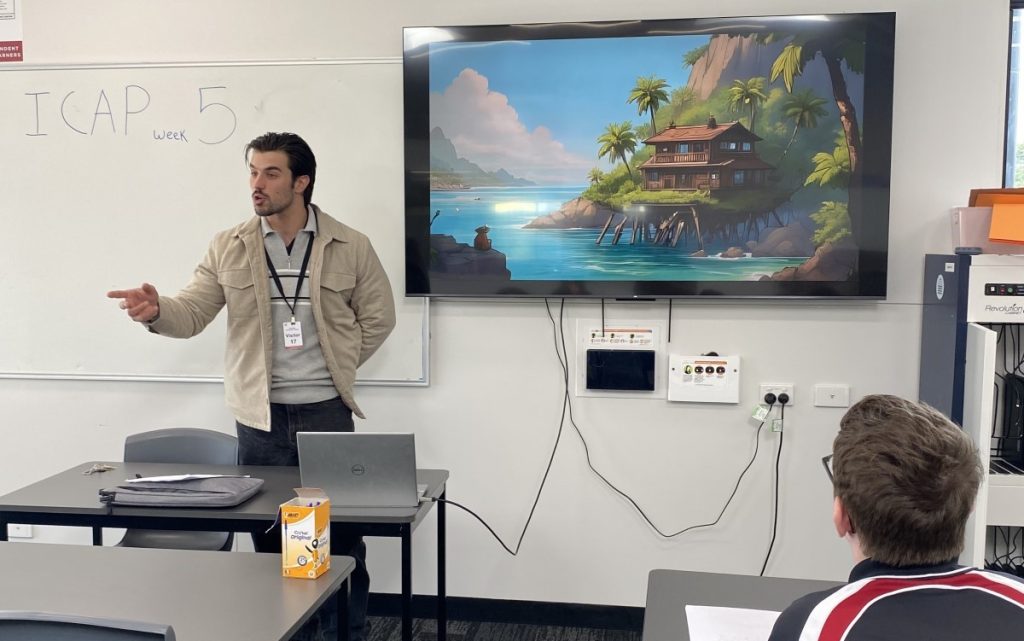
ICAP is led by trained facilitators, so teachers simply supervise. There’s no planning needed and no resources required. It’s rare to find a wellbeing or leadership program that adds value without adding workload.
Students genuinely enjoy the sessions.
This is the part that surprised me when I first saw ICAP in action. The activities aren’t just educational, they’re fun, creative and thought-provoking. Students especially love sessions about exploring cultural identity, learning from the interfaith presentation and collaborative world-building activities. The Model World Parliament simulation spark deep, thoughtful conversations. You can see confidence build week by week.
Plus, ICAP is fully funded for Victorian government schools, making it one of the most accessible and impactful wellbeing and intercultural education programs available.
My favourite part? The conversations.
These are the moments that stay with me long after the sessions end.
I’ve seen quiet students open up about their cultural background for the first time. I’ve seen Year 8 students surprise themselves by stepping into leadership roles. There were friendships form between students who hadn’t spoken once during class that day. And, I’ve seen young people from Year 6 articulate thoughts about fairness, identity and belonging in ways that feel wise beyond their years.
There’s something powerful about giving students a slower, more intentional space to speak, and giving them adults who simply listen.
When students feel safe, seen and genuinely heard, everything changes.
Final Thoughts
If your school has been trying to introduce more wellbeing, inclusion, intercultural capability or student leadership opportunities, but the timetable keeps getting in the way, running programs before or after school might be the answer.
ICAP fits beautifully in that space. It’s flexible, meaningful, facilitator-led and designed to help students grow in ways that don’t always fit inside the traditional school day.
Quick Summary: What Schools Need to Know about ICAP
What is ICAP?
ICAP (Intercultural Citizenship Ambassador Program) is a facilitator-led wellbeing and intercultural education program by Cultural Infusion.
Why run after-school wellbeing and leadership programs?
After-school sessions offer smaller groups, calmer environments, and higher engagement. They are ideal for student wellbeing, SEL programs, leadership development, and intercultural capability.
Is ICAP funded for Victorian government schools?
Yes. ICAP is fully funded for Victorian government schools.
Which students benefit most from ICAP?
ICAP supports Years 7–9 and students who need help with identity, belonging, confidence, leadership or intercultural capability.
▶️ Watch ICAP in action: https://www.youtube.com/shorts/eoGkUUFE64k
If your school is looking for a flexible, culturally rich program that supports student wellbeing, belonging and leadership, ICAP is available before and after school with full facilitation provided. Learn more or register your school for ICAP here.