
About
September 23, 2026
Am I Communicating What I Think I Am? Building Better Classroom Connections
Learning Hub
7 mins read
Table of Contents
Teachers are more than educators. They become translators of worlds as they help students navigate different ways of communicating, learning and understanding. A big part of your role is understanding different communication styles – students’ and your own.
Giving students feedback is an essential part of learning. In the classroom, telling a student, “Don’t be afraid to disagree. You need to be more assertive”, might seem like an encouraging way to build confidence and critical thinking.
But what happens when the message we intend to send isn’t the message a student receives?
For some students, this feedback can carry a different meaning. Rather than feeling encouraged to participate, they may interpret it as being told their way of communicating ideas is ‘incorrect’.
Of course, this is not the case for every student; some genuinely lack the self-confidence to speak up in classroom situations. But before assuming a quieter or less assertive student needs to change, is it worth asking: are we communicating what we think we are?
The way we interpret, communicate and respond to one another is shaped by the different experiences and perspectives we bring into the classroom.
Teachers aren’t just teachers; they become translators.
So, if classrooms become meeting places for different stories, identities and ways of seeing the world, how does a teacher navigate these differences in communication styles?
This doesn’t mean being an expert in every culture that comes into your classroom;
instead, teachers become a sort of ‘translator of perspectives’, helping students see different perspectives, expectations, communication styles and cultural experiences.
Instead of translating languages, you help to translate the different ways of understanding the classroom.
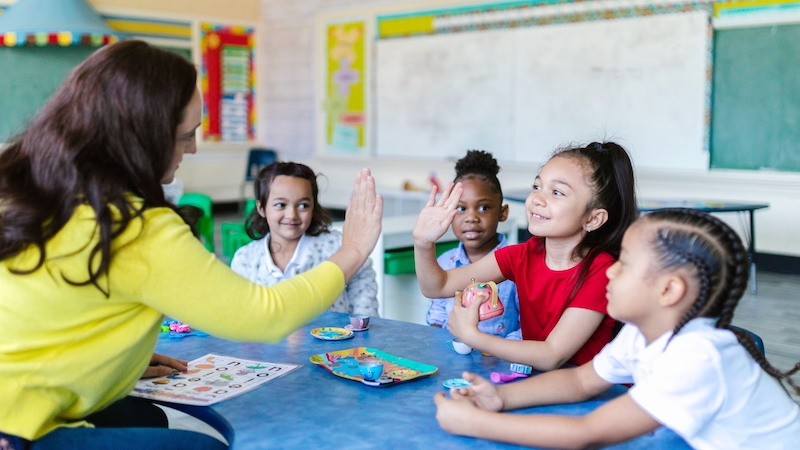
Teachers are constantly translating between different forms of understanding. You translate the curriculum into something students can engage with; feedback into opportunities for growth; and moments of conflict into opportunities for learning. But cultural differences can make this translation less straightforward.
A teacher may believe they have communicated clearly, while a student’s pre-disposed schema can influence how that message is understood.
When good intentions don’t land as intended
Intent and impact, therefore, begin to matter; what we mean to communicate and do isn’t always the same thing. If a student’s schema affects their interpretation, what we mean to communicate isn’t always what they take away.
When our words negatively affect others, emotions can run high, sometimes resulting in disengagement or conflict.
Take Mrs Chen, for example. She wants her student to develop her argument and participate more confidently. The intention here for Mrs Chen is to simply increase her students’ engagement with the syllabus. But her students’ schemas cause her to interpret assertiveness and disagreement differently.
Intent reflects the meaning or aim of an action, whereas impact denotes what the other person experiences as a result.
So, although Mrs Chen’s intention increase participation, her feedback appears to reduce her student’s engagement.
It is moments like these that might leave teachers asking, “Why didn’t my advice work?”
Communication has a cultural context
Often, these misinterpretations stem from differing communication styles. Communication isn’t culturally neutral; ideas around directness, disagreement and respect can differ.
Ideas about directness, disagreement and respect can vary across cultural contexts. What one student experiences as confident or appropriately direct may be experienced by another as uncomfortable, confrontational or disrespectful.
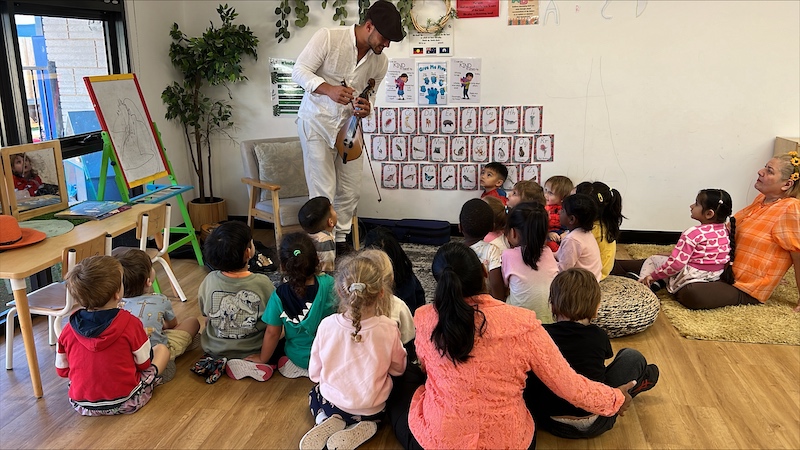
So, how can we use this information in classrooms? We know that the words teachers use can carry various meanings for different students. So instead of simply telling a student to “speak up”, you could invite them to share their thoughts and thinking with a phrase such as “would you like to share your perspective further?”
Just as a translator considers meaning and context rather than simply repeating words, teachers can consider how their message might be understood from different perspectives.
But don’t turn cultural differences into assumptions
As we explore cultural identities in the classroom, teachers must recognise that identity isn’t fixed. They are shaped by many influences, including place, heritage, language, and belief systems. These influences are fluid and can shift over time.
This is why it is also essential to remain curious about each individual student and how their schema can affect their communication style.
You might ask yourself, what can this student teach me? Learning simultaneously about their communication style, whilst improving the openness of your own.
So, how can teachers become better translators?
Now we know how to recognise a student with a different communication style, improve our own communication style, whilst understanding the differences between intention and impact. But how can teachers actually implement this in classrooms?
If practice really does make perfect, practising communicating in ways that leave room for clarification and dialogue can be great for schools. A really great way of recognising students’ communication styles is through the tentative ‘translators toolkit’:
Before consoling a student, think: What am I assuming?
Whilst communicating: Is my meaning clear?
Afterwards: How might this have landed?
If a student looks unsure or uncertain after a conversation, don’t be afraid to ask; missing these cues might mean you lose their engagement altogether.

From translator to bridge builder:
As teachers, we aren’t trying to eliminate cultural differences. We are helping students navigate them. Building ‘bridge moments’, connections between different perspectives, can help students navigate cultural differences whilst recognising that there is no single ‘right’ way to communicate.
The goal isn’t to become a perfect translator, though; it’s to become a more curious one. Misunderstanding is inevitable, but what matters most is how you approach it next. Do we assume, or do we pause and ask students how they are truly feeling?
To mediate any kind of conflict, an important aspect is helping differences in communication speak, not smoothing them over.
This is an aspect that Cultural Infusion brings into its professional development courses. If you want to learn more about this, we recommend you look into the Teachers as Cultural Mediators course on our Learning Hub.